Partnerships should change us too
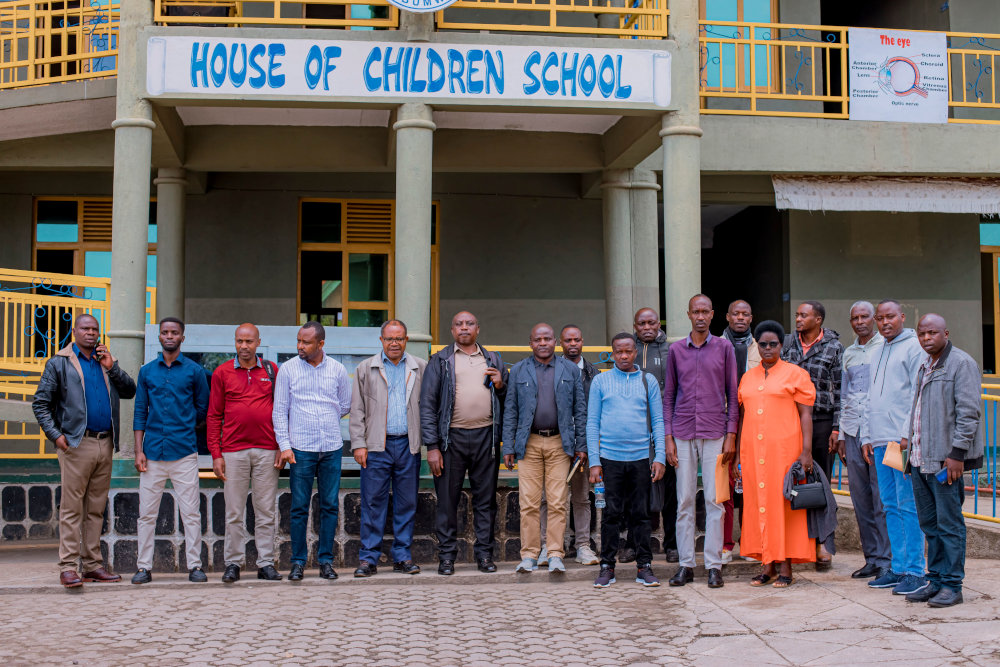
Over the past year, our partnership with Ubumwe Community Center (UCC) has helped us learn from an organisation that has spent two decades putting inclusion into practice with children with disabilities and their families.
Based in Rwanda, UCC works alongside people with disabilities and their families to create opportunities for education, independence and participation within their communities. Through its Community-Based Family Support and Early Intervention project, UCC has supported children with disabilities and families at risk of separation across Rubavu and Musanze, providing education, rehabilitation, assistive devices and individualised support, while also working with parents, schools, community health workers and local leaders.
The partnership has helped us see what inclusion can look like when it is built into family strengthening from the start and it has made us reflect on how we approach our own work.
Inclusion cannot be an afterthought
When we talk about family strengthening, we talk about supporting families to stay together and ensuring that children can grow up safely within their families and communities. Children with disabilities are an essential part of that picture.
Shema*, a 10-year-old child with multiple disabilities, was unable to walk and relied heavily on his family for everyday activities. Following a multidisciplinary assessment by UCC, he received an individualised intervention plan, educational support, physiotherapy and a walking frame. Over the following months, he gained greater independence in everyday activities and was able to walk using his frame. His participation in school increased, as did his confidence.
But the change was not only in Shema. His parents became active participants in his education and rehabilitation, learning how to support him at home and beginning to see his abilities and potential rather than only the limitations created by his disability.
This is what inclusion can mean in practice. It is not only access to a service; it is the chance for a child to participate, develop independence and be recognised for what they can do, while their family is supported to continue that journey with them.
Working with UCC has encouraged us to build these questions in earlier: Who is being reached? Who might be excluded? What barriers could prevent a child from getting to school or accessing services? What support helps a parent feel confident caring for their child? And how can communities identify families before they reach crisis point?
UCC’s work gives practical answers to those questions.
Who is being reached, and who might be excluded?
Early identification was a central part of the project. Working with local leaders, UCC identified 30 children at high risk of family separation across Rubavu and Musanze and assessed their individual strengths, needs and circumstances. But the project also showed that the need extended far beyond those who could be directly supported. Community actors, including Inshuti z’Umuryango (Friends of the Family) and Community Health Workers, were trained to strengthen identification and support within their communities, and visited 70 children with disabilities beyond the direct project.
For us, this underlines the importance of asking who might be missing from a programme, rather than only looking at who is already accessing it. It is a simple question, but one that can influence how a programme is designed from the outset.
What barriers might a child face in accessing school or services?
UCC’s work has also demonstrated that access is about more than whether a service exists.
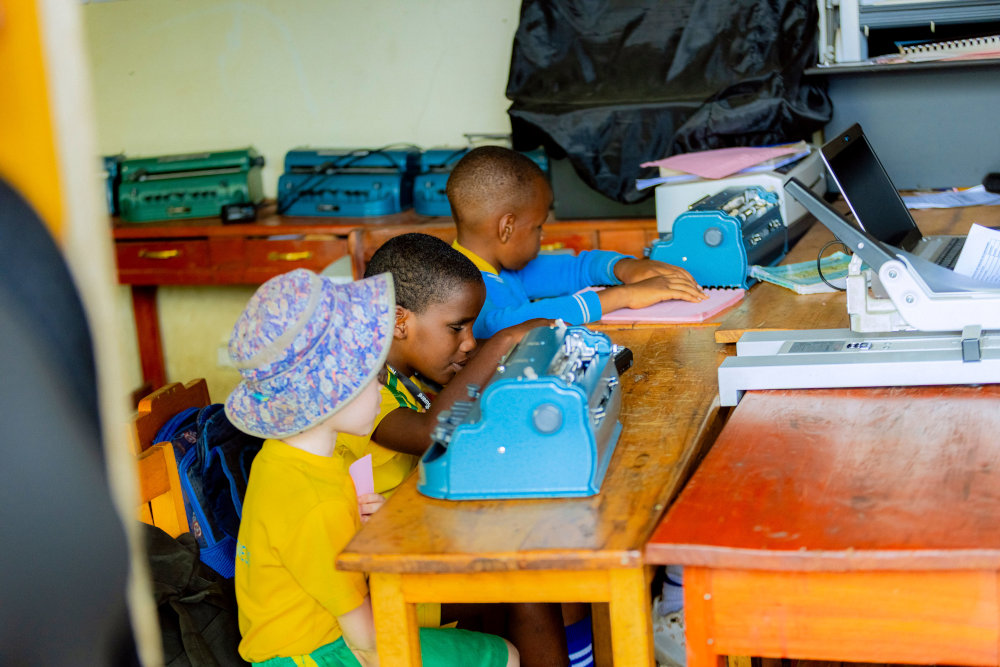
For the 30 children supported through the project, barriers to education and participation were addressed according to each child’s circumstances. Support included school fees, meals, learning materials and transport for children facing accessibility challenges or living far from school, alongside Individualised Education Plans, regular monitoring, occupational therapy, physiotherapy, medical support and assistive devices where needed.
Nine children received ten assistive devices, including wheelchairs, walking frames, white canes, eyeglasses and crutches.
These are practical interventions, but they show something important. Inclusion does not need to sit in a separate or complicated programme. It means understanding the different barriers a child may face and addressing those barriers through the way family strengthening is designed.
What support might a parent need to feel confident caring for their child?
The project has also brought us back to a central point about preventing family separation: children are not supported in isolation. The family around them needs support too.
Families caring for children with disabilities can face significant financial pressure, isolation and uncertainty, alongside barriers to education, healthcare and other services. UCC’s approach recognised that these challenges are interconnected and that supporting a child’s wellbeing also means supporting the people and relationships around them.
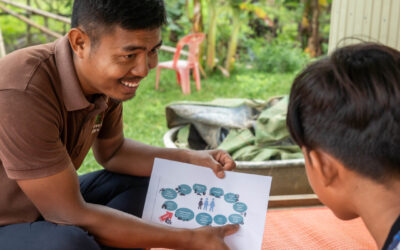
Parents received coaching, home visits and case management, with support focused not only on their children’s needs but also on building their own confidence. When children required services such as ophthalmological support, for example, parents were supported to navigate health-facility procedures themselves rather than having things done for them. This enabled parents to build the confidence and skills to manage their children’s needs independently.
Parents also established self-help savings and loan groups, creating spaces for economic cooperation, emotional support and shared experience. By the end of the project, some parents were using the groups to begin small businesses that generated income for their families.
This approach has reminded us that family strengthening is not about doing things for families. It is about working alongside them and making sure they have the support and opportunities they need to build confidence, strengthen their own capacity and thrive.
What can communities do to identify families before they reach crisis point?
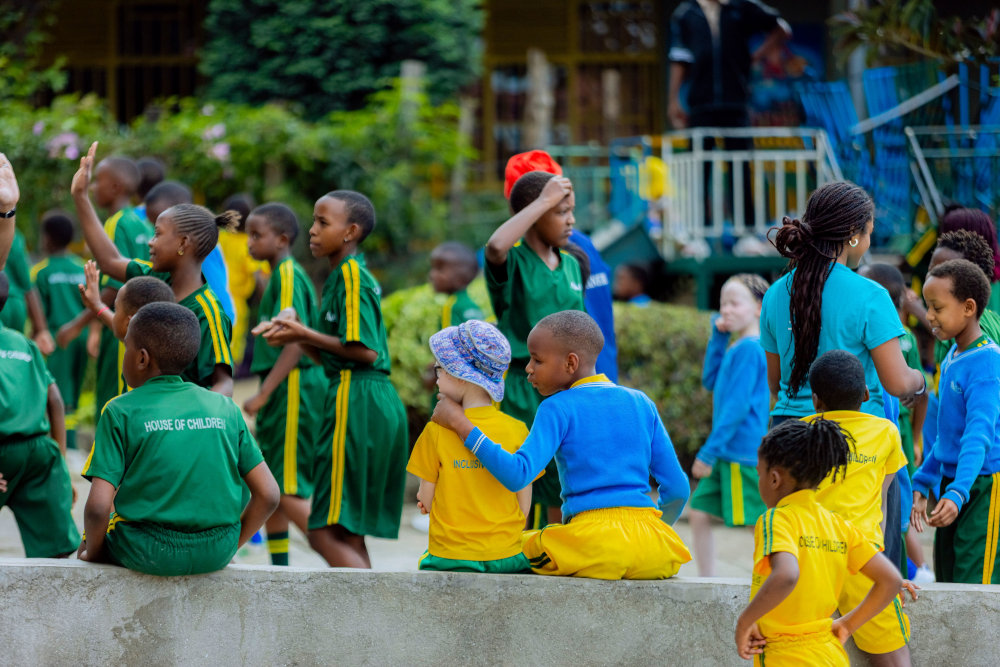
UCC has also shown why support cannot stop at the household door. Families need communities, schools and local systems that are able to recognise children’s needs and respond early.
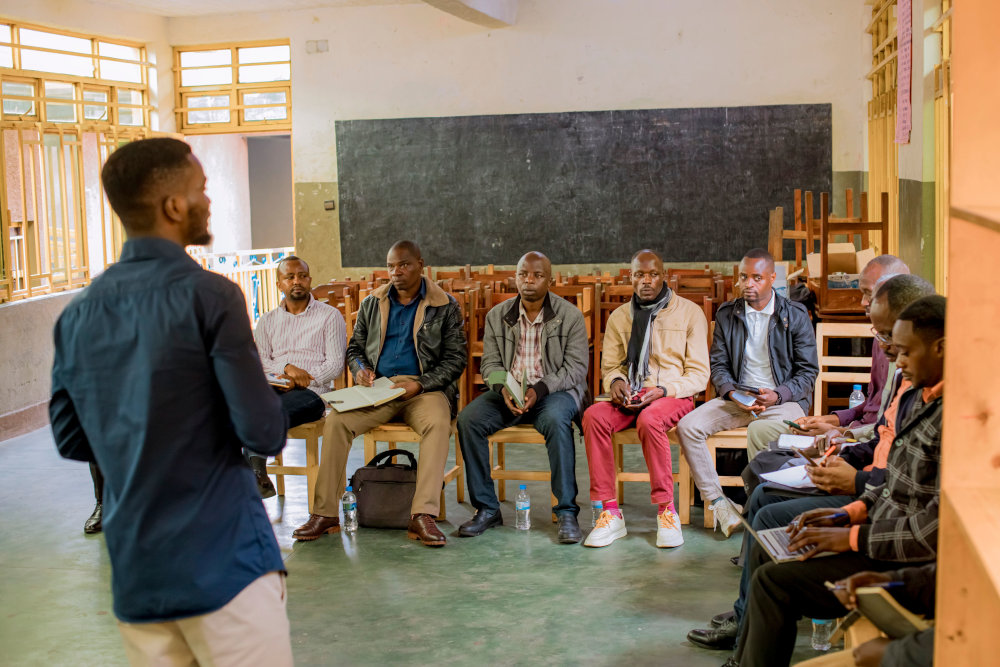
Inshuti z’Umuryango and Community Health Workers received training in disability awareness, early identification and community-based support. Head teachers were also trained on inclusive education, early identification of learners with disabilities and creating more inclusive learning environments.
This creates a wider network around children and families. It means that parents are not expected to navigate every challenge alone, and that communities have a greater understanding of how they can identify and respond to children’s needs earlier.
It also shows why prevention cannot sit with one organisation or one programme alone. The earlier children and families are identified and connected to appropriate support, the greater the opportunity to respond before challenges escalate.
“Our partnership with MJF Global has strengthened our commitment to supporting children with disabilities according to their unique needs, while keeping them within their families and communities. Together, we are strengthening families, promoting inclusion, and helping prevent family separation so that every child can grow and thrive in a safe and supportive family environment.”
Partnerships should change us too
Seeing UCC’s approach in practice has changed the questions we ask when we enter partnerships.
We do not want disability inclusion to be added once a project is already underway or treated as something that only belongs in a specialist programme. Children with disabilities should be considered from the outset, built into how we understand communities, design programmes and think about what families need.
UCC has shown us that this is possible and that it does not need to be complicated.
That does not mean the barriers facing children with disabilities and their families are simple. UCC’s experience showed the limits of available specialised services, delays in accessing assistive devices and the scale of need within communities. More children were identified as experiencing vulnerability and risk of family separation than the project could directly support.
But there is an important distinction between the complexity of those challenges and the question of whether programmes can include children with disabilities in the first place. When children with disabilities are considered from the beginning, inclusion becomes part of the way we work rather than an additional layer of work.
That is a shift we want to carry forward across our partnerships. It has changed how we think about our work with partners and what we expect inclusive family strengthening to look like from the outset. We’re looking forward to continuing this learning alongside UCC through our new partnership and sharing more about it in the coming weeks.
Name changed to protect the child’s privacy.