

By Kara Kamari, Head of Communications and Advocacy at MJF Global
This piece draws on reflections, examples and edits generously shared by the team at Children’s Future International (CFI).
Flexible cash support is often discussed as a financial intervention. Our experience with Children’s Future International (CFI) in Cambodia suggests that some of its most important lessons lie elsewhere: in questions of agency, trust and who makes decisions about what support families need.
Our partnership with CFI has helped our team reflect on what makes flexible support work, and what it asks of us as a funder.
Poverty is one of the major drivers of unnecessary family separation. Families can be deeply committed to caring for their children and still find themselves unable to meet their children’s needs in the face of poverty, displacement, conflict, insecure housing, limited access to healthcare or education, disability, violence or unstable sources of income.
When these pressures accumulate, they can undermine a family’s ability to provide safe and stable care, even where there is love, commitment and a strong desire to remain together. Without appropriate support, they can contribute to children becoming separated from their families.
This is the context in which we have been reflecting on our partnership with CFI in Cambodia.
CFI has worked with children, young people and families in Battambang Province since 2009. Its social work team works alongside families through case management, counselling and practical support, while also working with local authorities and communities to prevent unnecessary separation and support children returning from residential care to their families.
MJF funding supported this wider work, including flexible cash assistance for families facing immediate financial pressures.
There is a growing evidence base showing that cash transfers can improve food security, household consumption and access to education. The evidence on wider child wellbeing is more mixed, but there is increasing interest in how cash, particularly when combined with other services, can support families facing the economic pressures that contribute to family separation.
While cash assistance has become a well-established part of humanitarian response and social protection programming, its role within care reform and family strengthening is still developing. That gives us an opportunity to learn from approaches already tested in other fields, while paying close attention to what they mean in the specific context of preventing family separation and supporting children to grow up in families. CFI’s experience gives us a practical view of what this can look like.
Families do not experience poverty in the same way
For one family, a child dropped out of school to care for younger siblings, including a sibling with a disability, because there was no other childcare available while their parents worked. In another, a father was injured in an accident and could no longer work, leaving the family without its main source of income.
In another, a mother of five was referred to CFI after the local authorities found her bringing her children with her while she collected recyclable materials, instead of sending them to school. With CFI’s support, two of the children old enough for school were enrolled. Her husband, who had been using drugs and not supporting the family, has since passed away, and CFI is continuing to support her as she weighs whether her children can stay in her care.
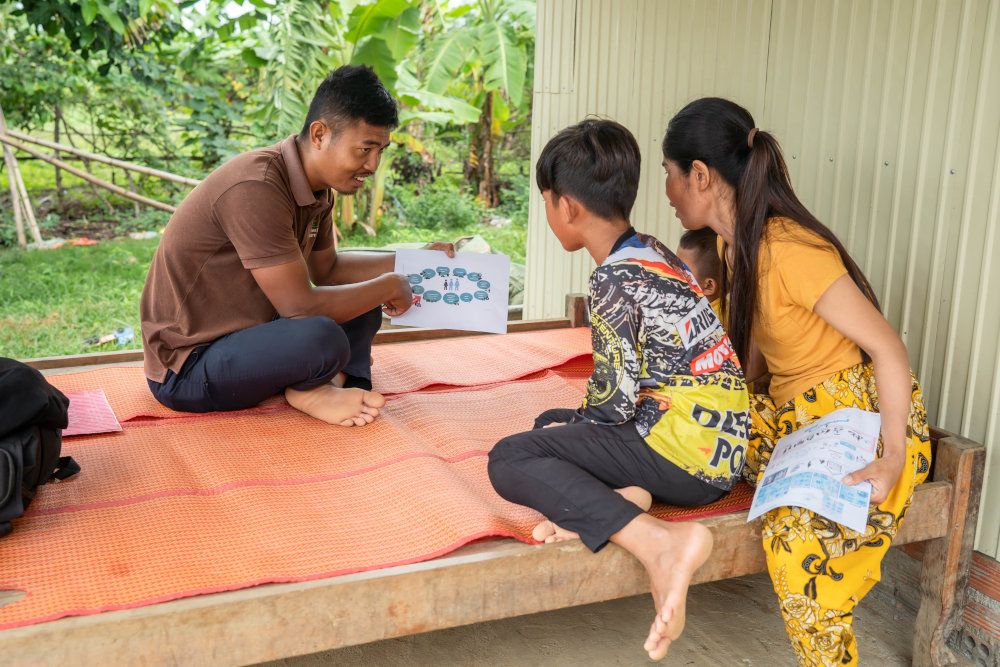
CFI’s social workers work with each family individually, building relationships, assessing needs and risks, and reviewing whether the support being provided is still appropriate. Cash is one part of that work.
CFI’s final evaluation of its cash assistance programme illustrates why flexibility matters.
Families were not all using the cash for the same thing. Eighty-eight per cent reported using it for children’s education, 63% for medical needs, 63% for food, 44% for household non-food items and 38% for hygiene.
The range of uses matters because families’ needs are not always predictable in advance. Food support can address hunger, but it cannot necessarily cover a child’s medical treatment, school costs or the investment needed to improve a family’s income.
One family was caring for a child with diabetes. Cash support let them attend medical appointments and meet healthcare costs, which also supported the child’s education.
In another family, a child was living with an elderly grandmother who relied partly on support from the local Buddhist temple. The family’s financial circumstances had put the child at risk of entering residential care because the grandmother could not afford the costs associated with school. With cash support, she was able to buy educational materials and cover the daily costs that allowed her grandson to continue attending public school.
The grandmother wanted to care for him. The problem was not a lack of commitment. She needed the resources to make that possible.
These examples reflect something we see across the programmes we support: families know their children, understand their circumstances, and are committed to caring for them. What changes outcomes is often whether families have access to the resources needed to act on it.
Families know what they need
Cash offers flexibility that a predefined package of goods or services cannot always provide. Families can decide what is most important for them at that moment. That can be a practical matter. It can also be about dignity and agency.
Another example from CFI involved a mother who earned a small and inconsistent income cutting fish for a market stall. CFI began working with the family after her daughter experienced sexual abuse. Following the abuse, the mother initially considered sending her daughter to residential care so she could receive support. CFI worked alongside the family to explore how her daughter could receive the support she needed while remaining within her family.
Alongside counselling and social work, the family received housing support and flexible cash assistance. With the cash, the mother was able to buy fish directly from fishermen and sell the cut fish herself, increasing her income and giving greater control and reliability over her source of earnings.
For us, this case raised questions about how we think about the relationship between economic insecurity and child protection. The abuse was not caused by poverty, but the family’s financial circumstances shaped what was possible in responding to it. Housing and income support became part of the wider response to the protection concern, alongside counselling and social work.
Flexibility and safeguarding
Cash transfers are not a one-size-fits-all solution. The amount of support, who receives it, how it is provided and how long it continues can all vary depending on a family’s circumstances. CFI regularly reviews whether cash remains appropriate as circumstances change, and considers what other safeguards or forms of support may be needed.
For example, in one family, there were concerns about a father’s use of violence and drugs. Providing cash directly to the mother could have created an unintended risk if the father used violence or coercion to take the money from her. CFI therefore changed the support from cash to food. In other circumstances, risks can be managed in different ways, such as providing cash to another appropriate family member or involving local authorities. All families also agree how cash should be used, including that it should not be spent on drugs, alcohol, gambling or illegal activities.
What this showed us is that flexibility is not about deciding that cash is always the best intervention. It requires professional assessment and technical skill to understand the circumstances of each family, consider potential risks and adapt the response when needed. CFI’s approach means that decisions about the amount and form of support, who receives it and when it should be reviewed can change as a family’s circumstances change.
That requires strong social work and safeguarding, as well as trust. CFI holds regular reviews to understand whether circumstances have changed, whether further support is needed and whether it is safe to reduce or end assistance. Some families have moved towards greater stability through a combination of cash, housing and income support, while others have continued to need support.
What does this mean for a funder?
If decisions about families are to remain with families, decisions about how best to support them also need to sit with the organisations and communities closest to the work. As a funder, that is not our decision to make.
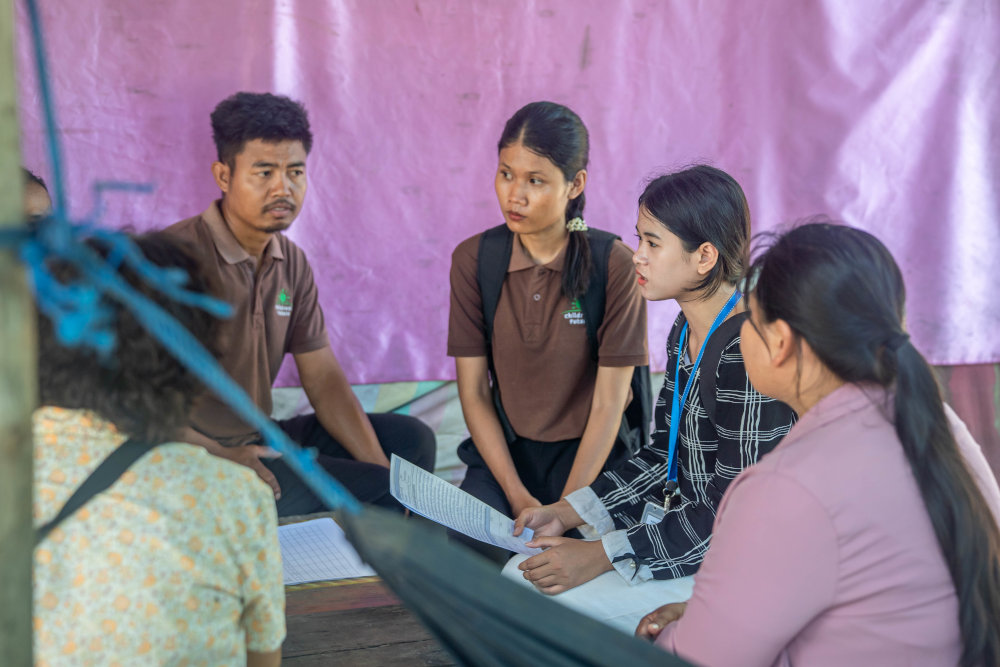
CFI’s social workers are working alongside families, understanding their circumstances and assessing what support is appropriate. Our role is to provide the resources and space for CFI to lead its own work.
That has implications for how we think about flexibility. Moving money between budget lines is the easy part. Real flexibility means building trusting relationships that make room for partners to respond when circumstances change or when what they are seeing leads them in a different direction from what was originally planned.
For funders, this can be uncomfortable. Cash assistance moves decisions closer to families. Flexible grantmaking moves decisions closer to partners. Both ask us to give up a degree of control.
Of course, this does not mean stepping away from accountability or safeguarding. We still have a responsibility to understand how resources are being used, what they are contributing to, and to work with partners to ensure children and families are safe. But these responsibilities should not require a funder to take control of decisions that belong with partners and communities.
Beyond the cash
Families know what they need, but their ability to act on that knowledge can be constrained by circumstances they did not choose and cannot easily change. It can also be constrained by the way support is designed. When programmes are built around a predefined solution, families may have little say in how resources are used, even when that solution does not fit their circumstances.
Cash creates more room for families to make those decisions themselves. The question is what that means for how we fund.
For MJF Global, that means continuing to ask not only what we are funding, but who is best placed to decide how resources should be used. If we are serious about community-led approaches, those decisions should be shaped by the people and organisations directly involved in the work and accountable to the communities they serve.
That requires mutual trust, flexibility, accountability and safeguarding. Trust needs to work in both directions: funders need to trust partners to lead, and partners need to be able to speak honestly with funders about what is working and what is not, without fear of losing funding.
The cash is part of the story, but the bigger story is about trust, agency and decision making. It is about whether families have the resources and support to make their own choices, and whether the systems and funding relationships around them give them the space to do so.